
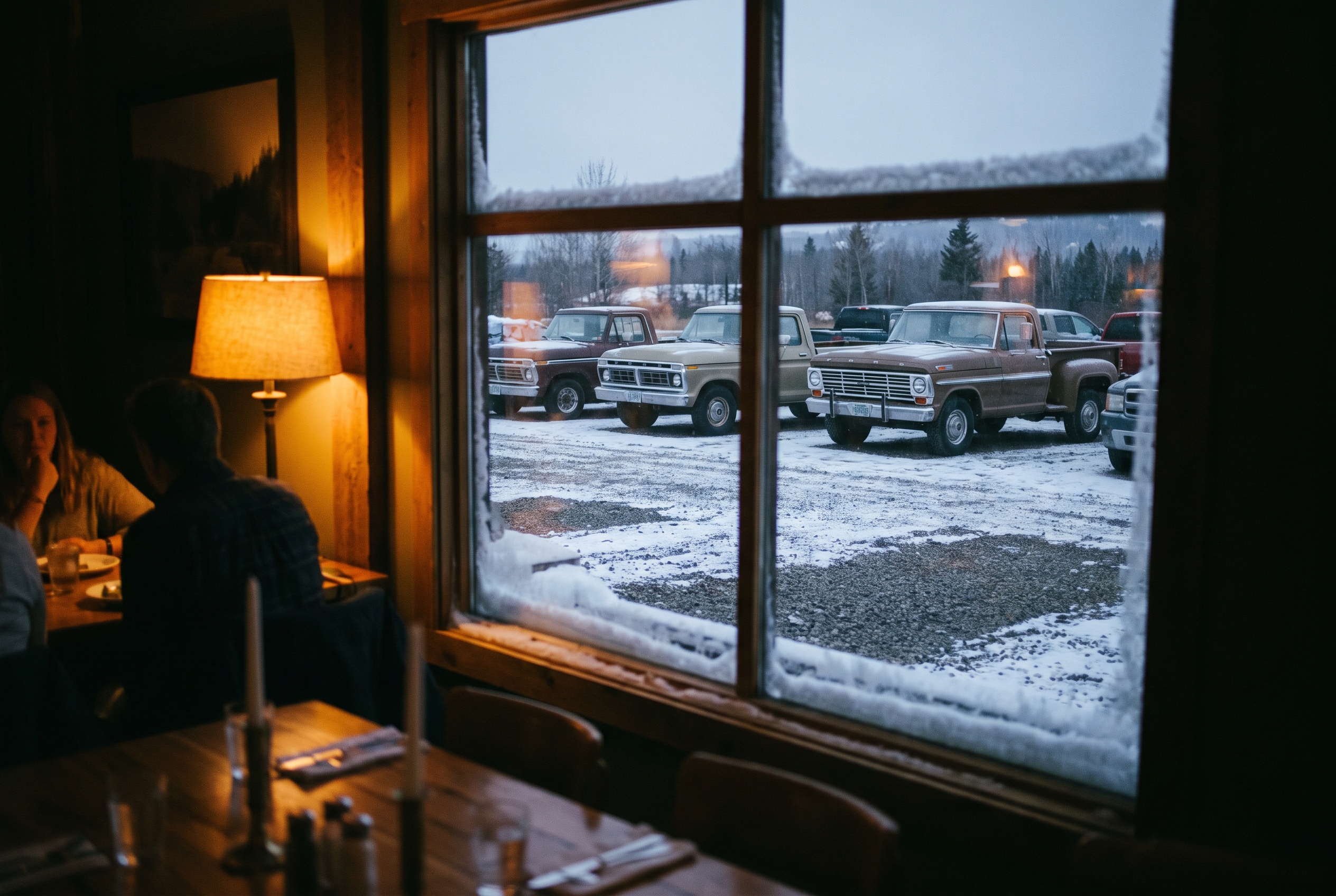

The relish tray is the whole argument. Cold cottage cheese, pickled herring, carrot sticks, a scoop of something orange nobody can name, all set down before you’ve ordered a drink. It arrives unasked at supper clubs from the Iowa Great Lakes down to the bluff towns along the Mississippi, and it tells you everything about what kind of meal you’re about to have. Slow. Fixed. Built around a rhythm that hasn’t changed much since the 1960s, when these places went up next to lakes and rivers and stayed put.
Dickinson County holds the densest cluster left. Around West Lake Okoboji and Spirit Lake, the supper club survived because the lake crowd never stopped showing up for it. Drive US 71 through Arnolds Park or Milford on a July evening and you’ll see gravel lots filling before sunset, pontoon boats tied up at docks behind the dining room, people walking in off the water still in swimsuits with a shirt thrown over. The other pocket worth knowing sits in the driftless northeast, in Clayton and Winneshiek counties, where towns like Guttenberg, Elkader and Decorah kept the tradition going for a landlocked crowd instead of a lake crowd. Same relish tray. Same low lighting. Different view out the window.
What the menu actually looks like
Expect a printed menu that hasn’t been redesigned in a while, and don’t mistake that for neglect. Prime rib is the anchor, usually on weekends only, cut to order and named by size rather than ounce — the queen cut, the king cut. Friday leans toward fish, often a broiled or fried walleye if the kitchen can get it, sometimes a Friday-only special that regulars plan their week around. A salad bar comes standard, heavy on iceberg and canned beets, plus a soup of the day that’s usually better than it needs to be.
Then there’s the drink. A brandy old fashioned, made sweet with 7-Up or sour with soda, is close to a regional signature at this point, and in summer a lot of these places pour a slushy brandy concoction out of a machine behind the bar that runs all season. Dessert typically comes with the meal rather than as an upsell — a wedge of pie, something with ice cream — because the whole structure of a supper club meal assumes you’re staying a while, not turning the table.
When to go, and why it matters
Timing isn’t a minor detail here — it’s the difference between the real experience and a disappointing one. Many of these places still run limited days. Closed Sunday, closed Monday, sometimes closed Tuesday too, especially away from the lakes where the off-season crowd thins out fast. Around the Iowa Great Lakes, business follows the water: full swing from Memorial Day through Labor Day, then a scaled-back schedule once the lake cabins empty out and the fishing crowd replaces the boating crowd. In the driftless towns, the calendar runs more on weekends year-round, with a bump during fall color season when Highway 52 and Highway 9 fill with leaf-peepers working their way along the bluffs.
Go early if you want the full ritual without a wait — many supper clubs open their dining room around 4:30 or 5, well ahead of typical restaurant hours, because the original customers were farmers and factory shift workers who ate supper early and expected the kitchen to be ready. Show up at 5 on a Saturday in Milford in August and you may still wait forty minutes for a table. Show up at 4:30 and you won’t.
What else is worth the drive
Around Dickinson County, a supper club dinner pairs naturally with an afternoon at Arnolds Park’s amusement rides or a slow lap around West Okoboji by boat rental, and Spirit Lake’s public beaches make a good excuse to arrive hungry. In the northeast, plan the meal around a day in the Yellow River State Forest or a walk through Decorah’s Ice Cave, then loop down along the Mississippi through McGregor and Lansing before dinner. Both regions reward a full day out rather than a straight-there-and-back trip; the drive itself, especially along the bluff roads near Guttenberg, is part of what people come back for. The Travel Iowa site keeps current seasonal listings for both areas if you’re building a weekend around one.
The thing most people get wrong
Visitors assume a supper club takes reservations the way a city restaurant does, or that a credit card is a given. Neither is reliable. Plenty of these places still run cash-and-check-friendly, with a card machine that may or may not be working that night, and many don’t take reservations at all outside of large parties — you put your name in at the bar and wait, which is half the point, since the bar is where the relish tray sometimes turns up before you’ve even sat down. Call ahead if you’re driving any real distance, especially off-season, since hours shrink fast once the lake crowd goes home. And don’t confuse “supper club” with nightlife — the name is a holdover from private membership clubs decades back, and what’s left is just a dinner house with long memory. For background on how that membership-club history took root in Iowa, the State Historical Society of Iowa has archival material worth a look before you go.