

You need a fishing license and a trout stamp before you wet a line in any of these streams, and the trout stamp is not optional even if you plan to release everything you catch. Both are available through Go Outdoors Iowa, along with the current regulations booklet for the season you’re fishing. Buy both before you leave the truck. Conservation officers in this part of the state check licenses on the water, not just in parking areas.
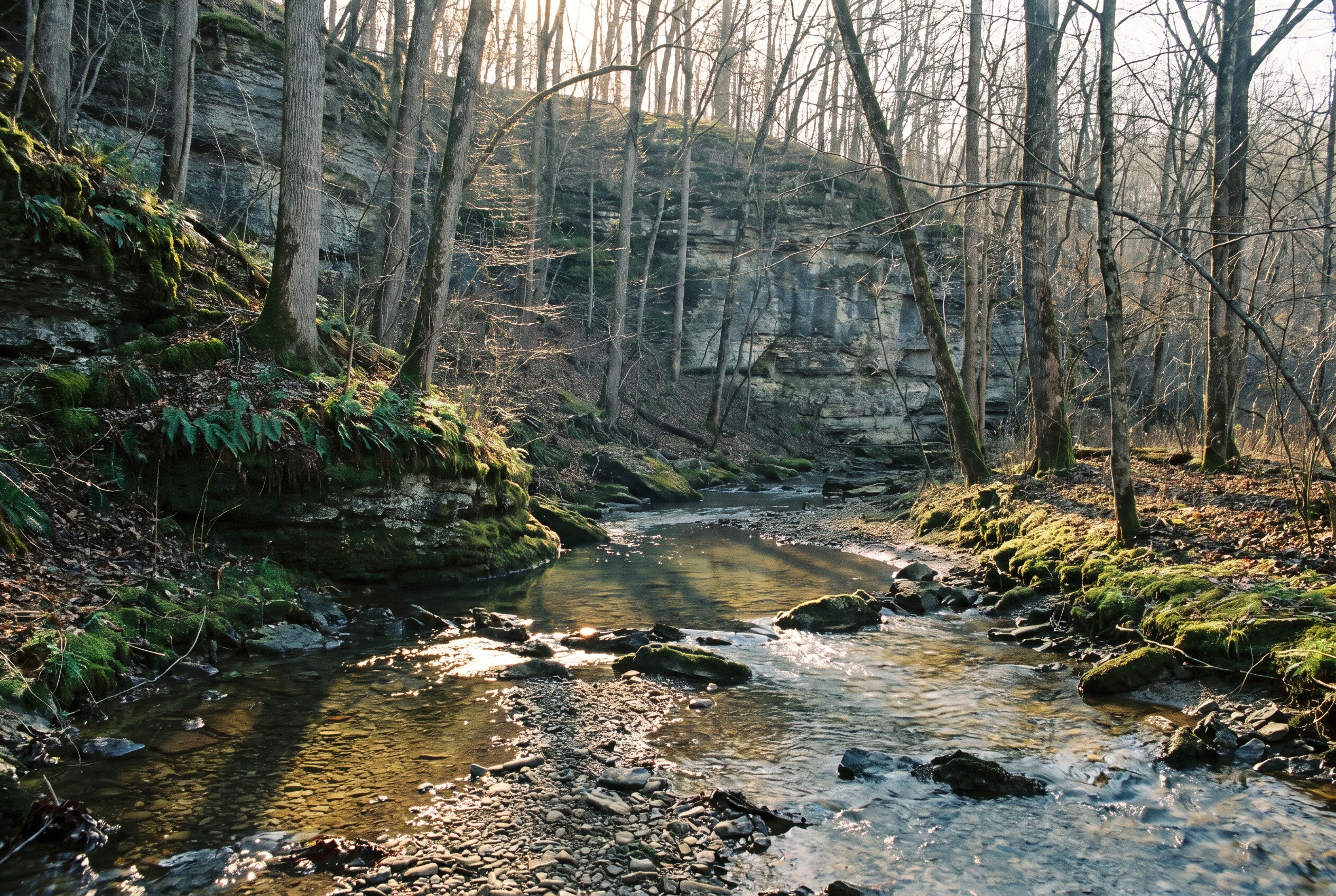
The driftless streams of northeast Iowa are spring-fed, which means they run cold even in July and stay open even in a hard January. That’s the whole reason trout can live here in the first place, in a state better known for catfish and walleye. It also means the fishing calendar doesn’t follow the same rhythm as the rest of Iowa’s fisheries.
Timing and conditions
Spring and fall fish best. Water temperatures sit in the range trout prefer, insect activity picks up, and the streams haven’t been hammered by heat stress the way they can be by late July. Early morning is the move in summer — trout get sluggish and stressed once water temps climb, and a fish caught and released in eighty-degree water has a real chance of dying even if it swims off looking fine.
Rain changes everything fast. These creeks are fed by groundwater, so they clear quickly compared to a muddy Mississippi tributary, but a heavy storm will still blow out visibility for a day or two. Check the creek before you rig up. If it’s running the color of coffee with cream, drive to the next stream on your list instead of forcing it.
Winter fishing is legal and locals do it, but the streams ice up in the slow pools even when the riffles stay open. Wading in January requires different judgment than wading in May. Know the water before you step in it.
Where to go
Winneshiek County has some of the best-known water — Bear Creek, Trout River, and Coldwater Creek all hold wild and stocked brown trout, with public access points scattered along county roads. Allamakee County’s Waterloo Creek and French Creek see heavy pressure near Dorchester and Waukon but reward the effort, and Paint Creek runs through Yellow River State Forest, which gives you miles of stream with public land on both banks — a rarity in this part of the state, where most streambank is private.
Clayton County’s Bloody Run Creek near Marquette is a smaller, technical stream that fishes well for anglers who don’t mind working a tight, brushy channel. Fayette County adds several smaller tributaries that get less pressure simply because they’re harder to find, which is its own kind of reward if you’re willing to study a plat map.
The Iowa DNR publishes a stocking schedule for these streams, and it’s worth checking before a trip rather than relying on last year’s memory. Stocking trucks run on a rotation, and a stream that was loaded with fish in April can be fished down by June.
Rules that catch people off guard
Not every stream is managed the same way, and this is where anglers get in trouble without meaning to. Some stretches are designated artificial-lures-only, some require barbless hooks, and some are catch-and-release year-round regardless of season elsewhere in the state. These special regulation sections are usually marked with signage at access points, but the sign can be easy to miss if you park upstream of it or wade in from a spot that isn’t the official access.
Daily limits vary by stream category too, and a limit that applies to one creek doesn’t necessarily apply to the one a mile away. There is no substitute for reading the current regulations before you go — not the version you remember from two seasons ago.
Access is the other trap. Much of the streambank in the Driftless region is private land, and Iowa DNR has secured public easements along many popular stretches, but those easements are specific corridors, not blanket permission to roam. Staying inside the marked easement matters, especially where a stream winds close to a farmstead or pasture. A landowner who’s tolerant of anglers on the easement can be a lot less tolerant of someone climbing a fence to reach a better pool.
Regulations, stocking schedules, and stream designations all change from year to year, sometimes stream by stream. Confirm current dates, limits, and special regulation boundaries with the Iowa DNR before you head out — the booklet is short, and reading it takes less time than driving to the wrong creek.