
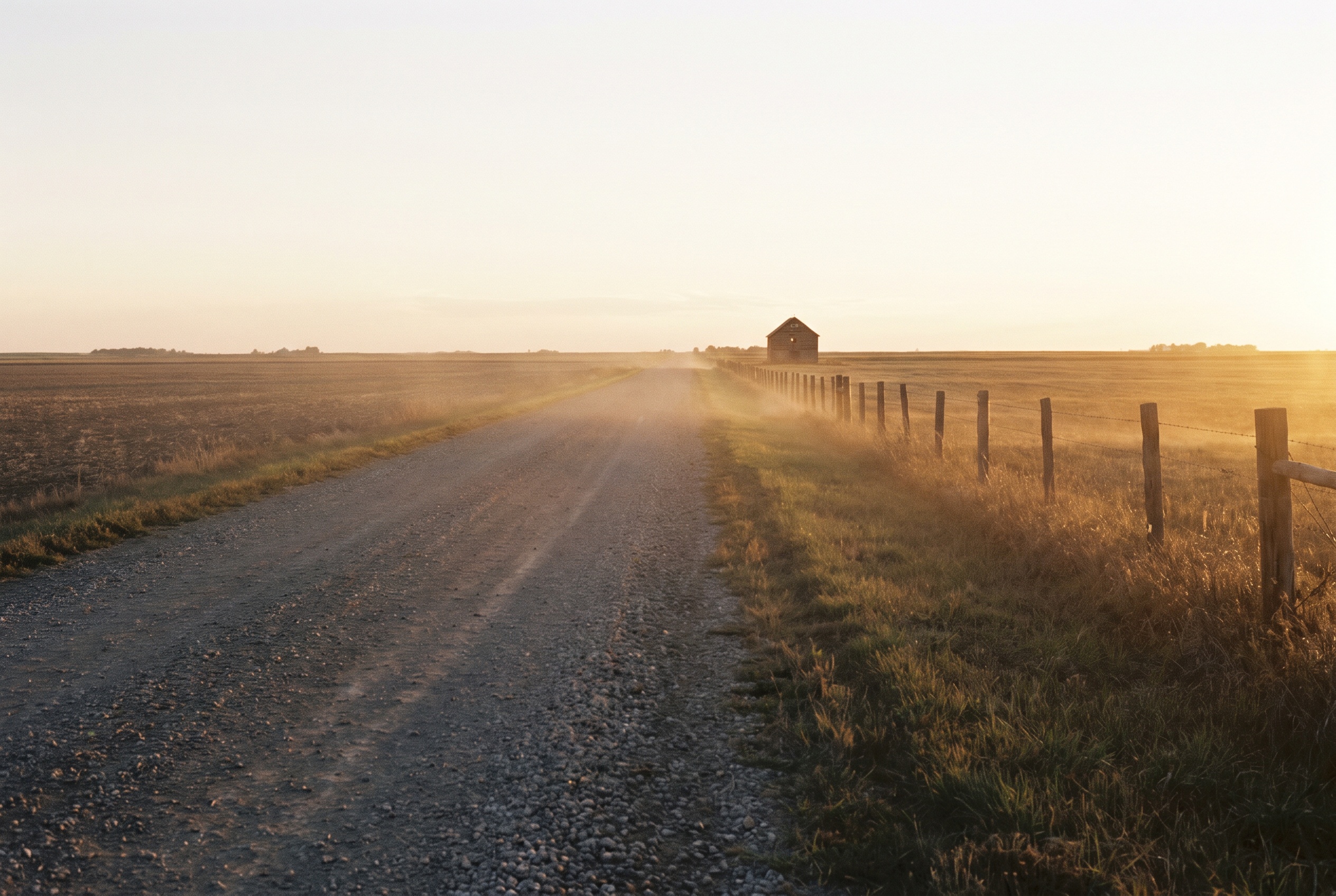

Drive south out of Kalona on Iowa Highway 1 in late August and you’ll pass a folding table at the end of a gravel lane, unattended, with tomatoes, sweet corn and loaves of bread lined up next to a metal box. There’s no cashier. You leave what the hand-lettered sign says and take what you came for. That honor-system stand, repeated on farm after farm through this stretch of Washington County, is the clearest window into what makes Kalona’s Amish and Mennonite community different from a roadside attraction built for tourists. Nobody’s performing here. This is just how the neighborhood runs.
Kalona sits about twenty miles southwest of Iowa City, and the settlement around it is the oldest Amish and Mennonite community west of the Mississippi River, dating to families who arrived in 1846. It never left. That’s the part worth sitting with. Plenty of places in Iowa preserve history behind glass. This one still farms it, bakes it and drives it to church on Sunday.
What you’ll find when you get there
Downtown Kalona is small and walkable, built around a core of shops that sell quilts, bulk foods, furniture and baked goods, many of them run by Amish or Mennonite families. The Kalona Historical Village, a cluster of preserved buildings including a schoolhouse, a church and a caboose, gives the fuller backstory of how the settlement formed and split over the decades into its more conservative and more assimilated branches. It’s a good first stop if you want context before you start driving the back roads.
Out on those roads, expect buggy traffic. Slow-moving vehicle triangles mark the horse-drawn buggies you’ll share the highway with, especially on Highway 22 and the county roads branching south toward Wellman. Farms here still run without electric lines to the house in many cases, though tractors and modern equipment show up more than outsiders expect. The image of Amish life as frozen in one century is mostly wrong. What’s preserved is the discipline about which changes to accept and which to refuse, decided community by community, sometimes farm by farm.
When to go, and why it matters
Go on a weekday. Amish-run shops and stands close on Sundays without exception, and some close midweek afternoons too, so a Saturday drive can leave you staring at a closed sign you didn’t expect. Fall is the strongest season to visit, when farm stands are loaded with produce and Kalona’s fall festival brings craft vendors, food and a parade downtown. Spring works too, with less crowding and a good chance to see fieldwork underway. Winter is quieter; some shops trim their days, and the back roads can be rough going after a heavy snow, so call ahead if you’re driving far for a specific store.
What else is nearby
Wellman and Riverside sit within easy reach and round out the county’s small-town character, Riverside best known for its tongue-in-cheek claim as the future birthplace of a certain fictional starship captain. Iowa City is close enough for a full day that combines the Amish settlement with a university-town lunch. For deeper background on the settlement’s origin and the religious splits that shaped it, the State Historical Society of Iowa keeps records worth digging into before or after the trip, and Travel Iowa lists current seasonal events around Kalona if you want to time a visit around the festival.
The thing most visitors get wrong
Cameras. Many Amish families decline to be photographed, tied to religious convictions about pride and graven images, and it’s a genuine discomfort for them, not a photo op to negotiate around. Ask before you point a lens at a person, and expect the answer to sometimes be no. Photograph the farms, the quilts, the buggies from a respectful distance if you like. Leave the faces alone.
The second mistake is speed. These are farm-to-market roads built for a mix of cars and horse-drawn buggies moving at very different paces, and dusk is the hardest time to judge the gap. Slow down well before you think you need to, give a wide pass, and don’t assume a driver ahead of you sees what’s coming the way you do.