

Beaconsfield, in Ringgold County, has fewer than a dozen year-round residents depending on which census count you trust. It also has a mayor, a city council and a set of platted streets that show up on the county road map same as Des Moines does. That combination is the whole story. Iowa has dozens of towns like this scattered across its southern and western counties, places small enough that you could miss the city limit sign if you sneezed, yet still legally incorporated municipalities with the same basic rights and paperwork obligations as any city in the state.
Worth the drive isn’t the wrong phrase for it, even though there’s no restaurant to eat at when you get there. What’s worth seeing is the fact of the place. A grid of streets laid out for a town that never filled in the way its founders hoped, a few houses, maybe a church, and a hand-painted or state-issued sign announcing a population number that hasn’t moved much in fifty years.
What You’ll Actually Find
Don’t expect a downtown. Most of these towns were platted in the 1870s and 1880s when a branch rail line came through, or was rumored to be coming through, and local promoters filed a plat hoping to cash in on lot sales. Some towns got the depot. Some didn’t. Beaconsfield got one for a while. So did Le Roy, over in Decatur County, another perennial contender for smallest incorporated town in the state.
When the railroad pulled the branch line or the grain elevator closed, the town’s reason for existing went with it. What stayed was the incorporation itself. Iowa law makes dissolving a city a formal process requiring a vote of the residents, and in a town with nine or ten people, nobody’s organized the effort to undo two centuries of paperwork. So the town persists as a legal entity long after it’s stopped functioning as a commercial center. It still holds council meetings. It still has to file reports. A full list of Iowa’s incorporated cities, current and official, is maintained through the Iowa.gov portal, and it’s worth a look before you plan a route, since a few of these places have quietly dissolved over the years while others cling on.
When to Go, and Why It Matters
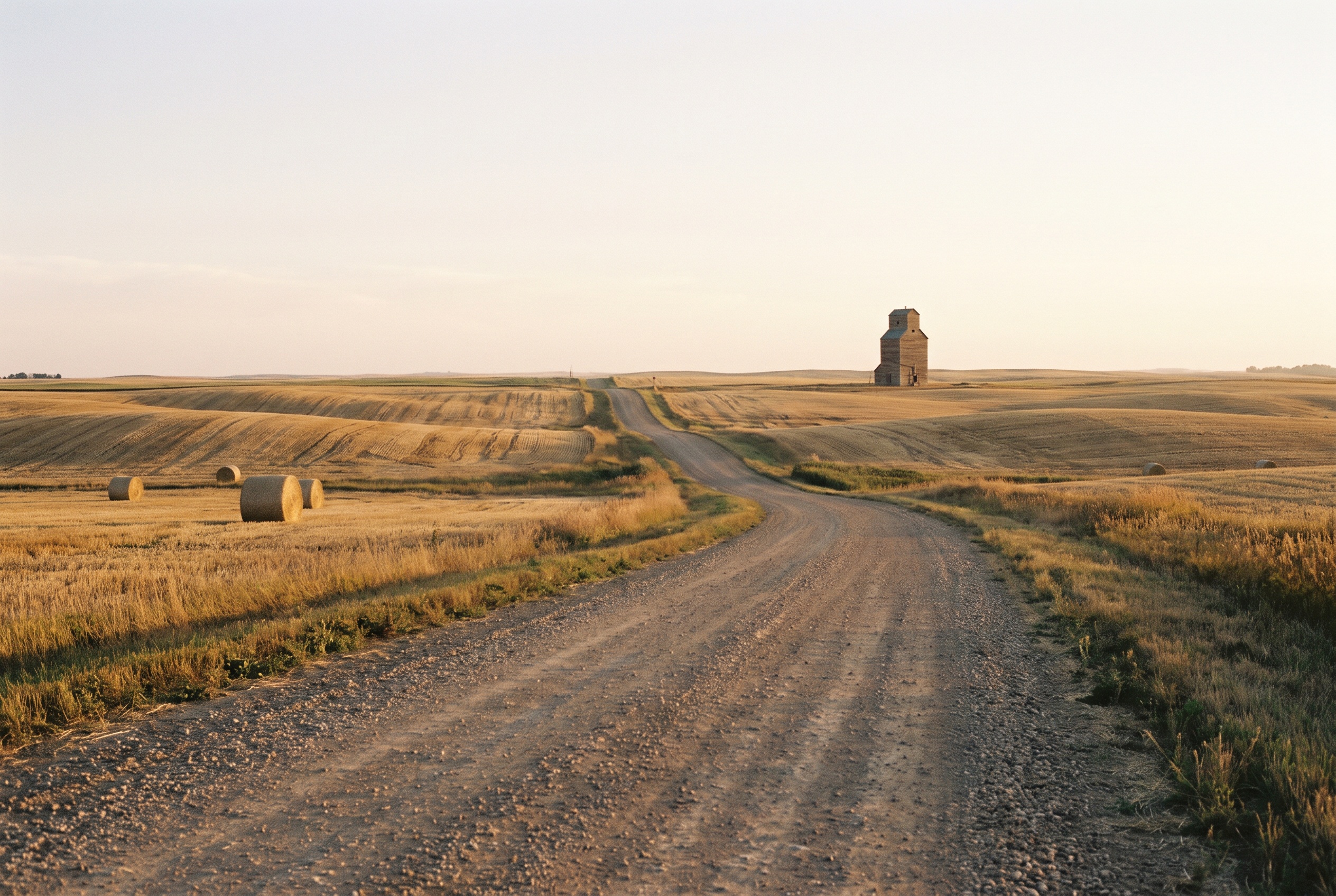
Go in late summer or early fall. The gravel roads that connect towns like Beaconsfield to the state highway grid are maintained by the county, and they’re driest and most predictable between August and the first hard freeze. Harvest season also gives you something to look at along the way — combines working the fields, grain trucks queued at whatever elevator is still running in the nearest real town. Winter travel on these roads is a different proposition. Snow removal priorities go to the roads that carry traffic, and a two-house town at the end of three miles of gravel is not a priority. If you go in January, go in daylight, and go with a full tank.
Spring brings mud season, which can strand a car on unmaintained gravel for longer than you’d like. There’s no towing service located in a town with nine residents.
What Else Is Nearby
Mount Ayr, the Ringgold County seat, is a short drive from Beaconsfield and has an actual courthouse square worth walking around, along with a diner or two if you time your trip for a meal. Leon, the Decatur County seat, sits near Le Roy and is home to Travel Iowa-listed Nine Eagles State Park, which has camping, a lake, and hiking trails if you want to turn a courthouse-and-ghost-town afternoon into an overnight. Both county seats have the kind of small-town square architecture — brick storefronts, a war memorial, a bandstand — that the tiniest towns never got around to building because they never had the population base to support it.
What Most People Get Wrong
The mistake visitors make is assuming a town this small is abandoned, or that “incorporated” is just a technicality nobody bothers with anymore. It isn’t. These towns hold elections. They have official city limits that determine speed limits, property tax jurisdiction and who plows what. A house inside those limits pays city taxes even if the city provides almost nothing in return beyond a stop sign and a name. Before you assume a place is defunct, check with the county auditor’s office, not just the road atlas — plat books and historical town records are archived through the State Historical Society of Iowa, and they’ll tell you whether the town you’re driving to still has a functioning government or exists only on paper. The two situations look identical from the driver’s seat. They are not identical in the county courthouse.