
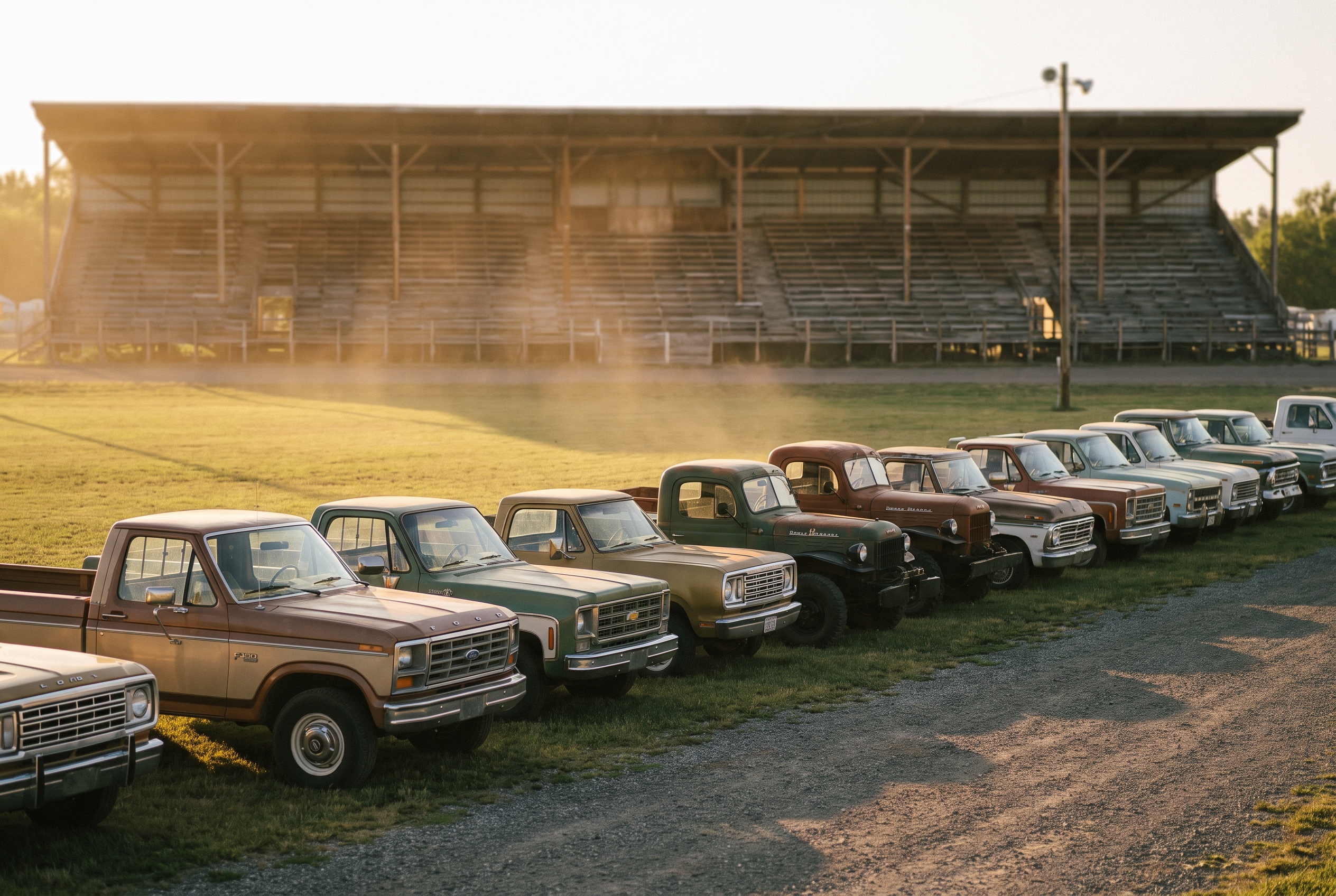

Spencer, in Clay County, is not on the way to anything. That’s the point. Every September, the Clay County Fairgrounds fills up for more than a week with livestock trailers, carnival trucks and a grandstand lineup that draws touring acts most small cities couldn’t book on their own. Locals will tell you, without much modesty, that it’s one of the largest county fairs in the country. They’re not wrong to brag. If you drive up U.S. Highway 71 through the Loess Hills’ northern edge and only see one county fair this year, make it this one.
But Clay County isn’t the only fair worth rearranging a weekend for, and it’s worth understanding what makes a good county fair different from the Iowa State Fair in Des Moines. The state fair is a spectacle built for a million visitors. A good county fair is built for the county it serves, and outsiders get to watch that machinery work up close: 4-H kids grooming steers before judging, a demolition derby that starts late because the tractor pull ran long, a food stand run by the same church group for thirty years.
What you’ll find when you get there
Expect livestock barns first. Cattle, swine, sheep and poultry are judged on a schedule posted near the fair office, and that judging is the actual heart of the event, not a sideshow to the midway. Walk the barns in the morning when the animals and the kids showing them are both still fresh. By afternoon the fairgrounds shift toward entertainment: a demolition derby or tractor pull most evenings, a grandstand concert if the fair board landed a name act, and a midway with rides that are smaller and slower than the state fair’s but somehow more fun for it.
Food is where county fairs earn their keep. Skip whatever’s newest on the menu board and order the pork chop sandwich or the loose-meat sandwich, usually sold from a stand run by a local civic group. That’s Iowa’s actual signature fair food, not the deep-fried novelty items designed to trend online. Fair boards set their own admission and grandstand ticket prices each year, and gate admission and grandstand seating are almost always sold separately, so check the specific fair’s schedule before you plan an evening around a headliner.
When to go, and why the calendar matters
Most Iowa county fairs cluster in July, right after the last of the spring rain and before harvest starts pulling farm families back into their fields. Madison County’s fair in Winterset runs in that window, timed so it doesn’t collide with the covered bridge tourist season later in the fall. Clay County is the odd one out, holding its fair in September, which is deliberate — it’s positioned as the last big fair of the season, after smaller county fairs have wrapped and families have a little more free time before school schedules tighten back down.
Go on a weekday if you can. Weekends bring the biggest crowds and the marquee grandstand acts, but a Tuesday or Wednesday afternoon gets you the barns without the lines, and you’ll actually get to talk to the kids showing animals instead of just watching from behind a rope three people deep.
What else is nearby
Spencer sits close enough to the Iowa Great Lakes region that a Clay County Fair trip pairs easily with a stop at Okoboji or Spirit Lake if you’ve got an extra day. Manchester, home to the Delaware County Fair, is one of the state’s oldest continuously running county fairs and still runs harness racing on its half-mile track, a tradition that’s mostly disappeared elsewhere in the state — worth the detour off U.S. Highway 20 even if you’ve never watched a harness race in your life. Winterset, beyond its fair, is close enough to the Madison County covered bridges that you can make a full day of both without much backtracking. For a fuller list of fair dates and locations across the state, the Travel Iowa events calendar tracks them county by county, and it’s a better source than any single county’s word of mouth.
The thing most people get wrong
Visitors treat a county fair like a two-hour stop between other errands. It isn’t. Livestock judging, grandstand shows and midway hours all run on different schedules, and there’s no single master timetable posted at the gate that covers everything — you’ll want to check the individual fair’s website or Facebook page the morning you go, since schedules shift daily depending on how judging runs. Budget the whole afternoon and evening if you actually want to see the fair rather than just drive through it. And bring cash. Plenty of the food stands and 4-H concession booths, run by volunteers rather than vendors, don’t take cards.
If you want the deeper backstory on why Iowa’s fair culture looks the way it does — tied to county agricultural societies dating back to statehood — the State Historical Society of Iowa keeps records on the state’s earliest fairs and how the tradition spread county by county through the 1800s. It’s a useful reminder that the fair you’re driving to see isn’t new. Somebody’s great-grandparents probably stood in that same grandstand.