
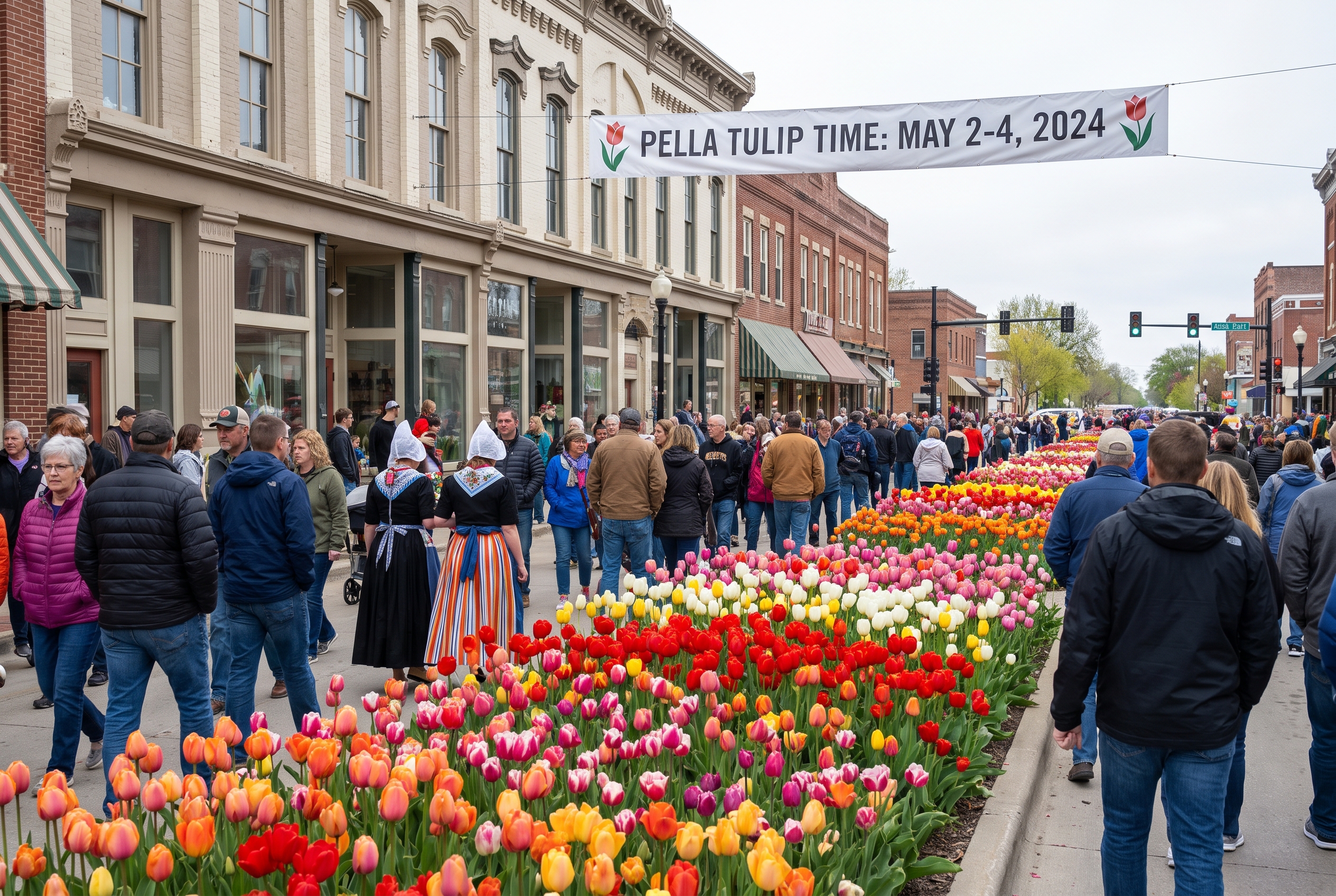

Pella’s Tulip Time runs for three days in early May, and if you’ve never been, the town does not do this halfway. Streets close. Klompen dancers scrub the pavement with brooms and buckets, the way Dutch housewives once did before a festival, and thousands of tulips planted the previous fall come up in reds and yellows along Central Avenue right on cue. The festival always falls on a Thursday through Saturday, but the specific weekend moves a little each year. Pella ties it to early May rather than a fixed date, which means you need to check before you build a trip around it.
The reason for the shift isn’t arbitrary. Tulips don’t read calendars. A warm April can push the bloom early; a cold, wet spring holds it back. Festival organizers pick the weekend based on when the flowers are most likely to be at peak, and they’ve been doing this since 1935, so they’ve gotten good at guessing. Still, guessing is guessing. The safest move is to check Travel Iowa for the confirmed dates once they’re posted for the year you’re planning, rather than assuming it’s the same weekend as last time.
What you’ll find when you get there
Central Avenue becomes a pedestrian corridor for the run of the festival. Storefronts along the square lean hard into their Dutch-village architecture, with false gable fronts and hand-painted tile work that stays up year-round but gets extra attention this week. You’ll see costumed dancers in wooden shoes performing in the street multiple times a day, a parade that draws people from well outside Marion County, and food booths selling Dutch letters, poffertjes, and other things you won’t find at a typical county fair.
The Vermeer Mill, a working windmill built to Dutch specifications along the Skunk River, runs during the festival and gives tours. It’s one of the tallest working windmills in the country, and most years it’s grinding grain the whole weekend. The Pella Historical Village, a cluster of restored 19th-century buildings just off the main square, expands its hours and adds demonstrations tied to the festival theme.
Expect crowds. This is not a quiet stroll through a small Iowa town. Parking fills up fast, especially on Saturday, and side streets several blocks out become the realistic option by midmorning.
Timing within the timing
Thursday is noticeably calmer than Friday or Saturday. If you’ve got flexibility, that first day gives you the parade and the street scrubbing without shoulder-to-shoulder sidewalks. Saturday draws the biggest numbers, partly because it’s the only day many visitors can make work, and partly because the evening events tend to land then.
Weather in early May in central Iowa is genuinely unpredictable — you could get 70 and sunny or a raw, damp 45 with wind off the Skunk River valley. Dress in layers and bring something waterproof. The festival runs rain or shine, and Pella has hosted it through some fairly miserable weather over the decades without canceling.
What’s nearby if you make a weekend of it
Lake Red Rock, the largest lake in Iowa by surface area when full, sits just a few miles south of Pella off Highway 14, and it’s worth a stop if you want open water and a break from the crowds. The Red Rock Dam overlook gives a wide view of the Des Moines River valley, and it’s especially good light in the late afternoon.
Pella itself sits at the junction of Highways 163 and 14, roughly forty-five minutes southeast of Des Moines, which makes it an easy day trip or an overnight if you want two full days of festival programming. Knoxville, home to the Iowa Sprint Car Hall of Fame, is a short drive south if racing is more your speed than tulip beds.
The thing most people get wrong
Visitors assume Tulip Time happens on the same weekend every year, book lodging a year in advance based on the previous spring’s dates, and then find out the festival moved by a week. Because the date is set to track the bloom rather than a fixed spot on the calendar, it can shift by seven to ten days from one year to the next. If you’re planning lodging in Pella itself, which has limited rooms compared to what the crowds would suggest, book early but confirm the actual dates before you lock anything in. The State of Iowa’s tourism channels and the festival’s own announcements are the reliable sources, not last year’s ticket stub.
One more thing people miss: the tulip beds themselves are planted with the festival in mind, but Pella’s public gardens stay tulip-heavy for a week or two beyond the official festival dates most years, depending on how the weather held. If you can’t make the festival weekend itself, a visit the following week can still catch decent color without the crowds — though you’ll miss the dancing and the parade, which is really the point of going in the first place.