
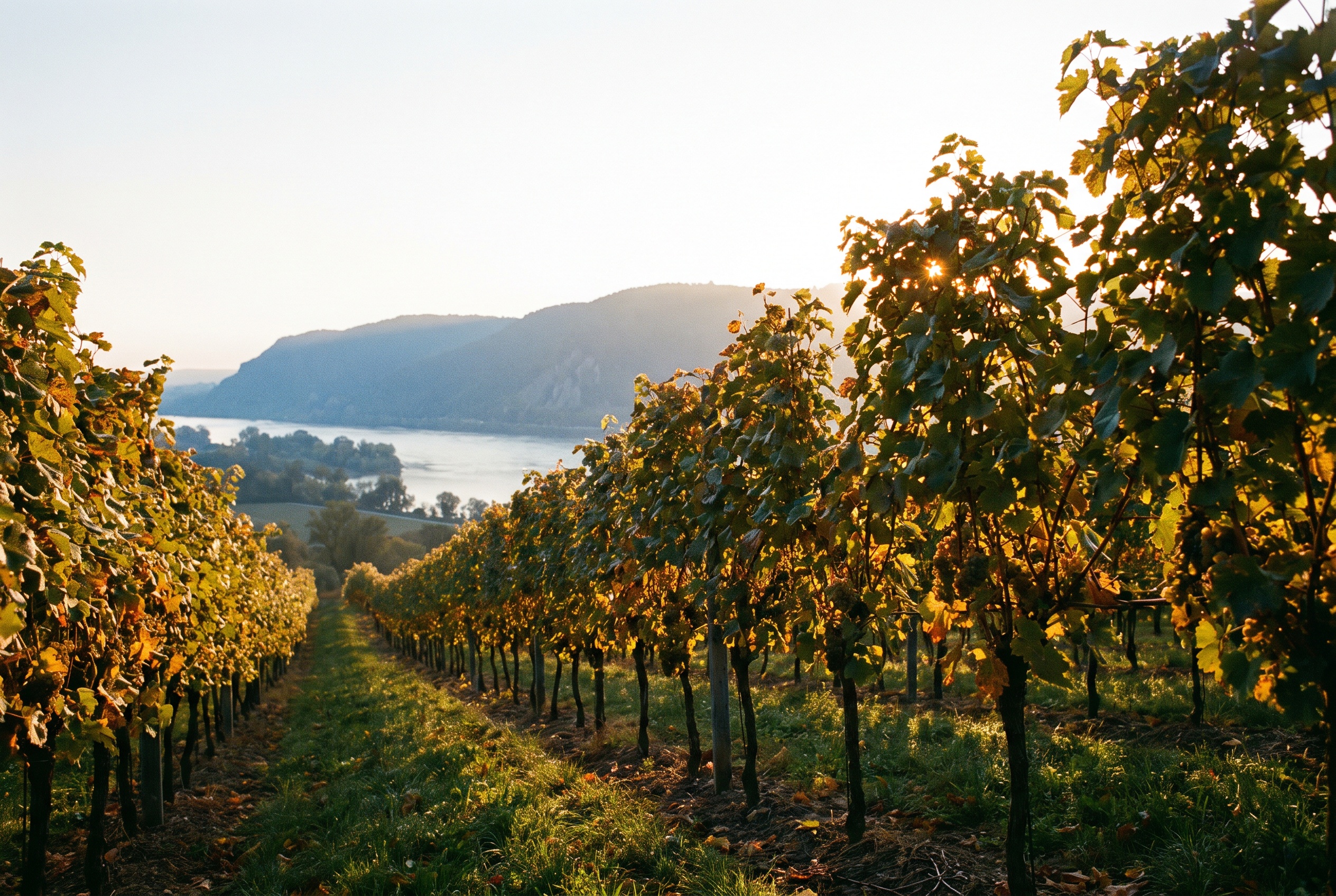

Get on Interstate 80 to the Amana Colonies exit, pick up U.S. Highway 151 north through Cedar Rapids and Manchester, and keep going until it drops you into Dubuque. From there, turn onto Highway 52 and follow the Mississippi River north through Balltown and into Guttenberg. That route is the backbone of a two-day loop that pairs Iowa’s oldest winemaking tradition with its newest reason to keep driving north: vineyards planted straight into the bluffs above the river, growing grapes bred to survive an Iowa winter.
The Amana Colonies have been making wine since the 1850s, back when the seven communal villages produced it for their own tables rather than for tourists. That history is worth a stop on its own, and the State Historical Society of Iowa keeps records on the Amana Society’s communal era if you want the longer version before you start tasting. Two hours north, the wineries around Guttenberg and Balltown are a different story entirely — most planted their first vines sometime in the last twenty years, working with grape varieties nobody in Napa has heard of.
What to Expect When You Get There
Iowa’s climate can’t support the wine grapes most people know. Winters kill them. So the vineyards here grow cold-hardy hybrids developed at the University of Minnesota and elsewhere — Marquette, Frontenac, La Crescent, St. Croix — bred specifically to survive twenty below zero and still make something drinkable. The result tastes different from what you’d get at a California tasting room. Expect more acidity, brighter fruit, and reds that lean lighter-bodied than a Cabernet. Some visitors love it immediately. Others need a second glass to recalibrate what they think wine is supposed to taste like.
Tasting rooms in the Amana Colonies tend to sit inside old brick buildings that once served the communal kitchens or wash houses, with tasting flights of four to six pours and a menu that leans into German and Amana-style food pairings — bratwurst, smoked meats, sauerkraut. Up along the river bluffs, the setup is more agricultural: a converted barn or a new building with a deck facing the vineyard rows and, on a clear day, a long view down into the Mississippi valley. Bring cash or a card for tastings and a bottle or two — pricing and pour sizes vary by winery, so check each one’s website before you go.
When to Go, and Why It Matters
Late September through mid-October is the window. Grape harvest happens in this stretch, so some wineries host harvest events or let visitors watch the crush. The bluffs along Highway 52 turn color at the same time, which means the drive itself becomes part of the reason to go — you’re not just tasting wine, you’re doing it with a river valley in full color out the window. Go earlier in summer and you’ll get patio weather but miss the harvest energy. Go later, into November, and some of the smaller operations start cutting back their hours for the season or close outright until spring. Always check a winery’s current hours before you drive two hours to find a locked door.
What Else Is Nearby
The Amana Colonies aren’t just wine — they’re a National Historic Landmark with working woolen mills, furniture shops, and restaurants still serving family-style meals the way they have for generations. If you’re heading north to the river bluffs, build in time for Pikes Peak State Park near McGregor, which has the best overlook of the Mississippi in the entire state, and Effigy Mounds National Monument just up the road, where Native American mound builders shaped the bluffs into animal effigies more than a thousand years ago. Dubuque itself, sitting right at the hinge point of the loop, has enough riverfront museums and old warehouse-district restaurants to fill an evening between wineries.
The One Thing People Get Wrong
Visitors assume Iowa wineries operate like Midwest versions of a California tasting room — open daily, drop-in friendly, full staff on hand. Many of the smaller operations along the river bluffs are family-run and open on a limited schedule, often Thursday through Sunday, with reduced hours in the off-season. A few require reservations for tasting flights, especially on fall weekends when the foliage traffic picks up. Before you plan a route around three or four stops, call ahead or check each winery’s site directly. The Travel Iowa site keeps a running list of the state’s wine trail members with links to each one’s current hours, which is a faster way to build an itinerary than guessing from an old blog post or a sign you half-remember from last fall.